Why enterprises need an intelligence mediation layer
Enterprise systems are designed for data structure and process stability, not for humans. Teams learn screens, managers pull reports, and cross-system data still moves by hand.
The mediation layer lets people express goals in human language while systems continue doing what systems do. Nexus Core translates, executes, monitors, reminds, and learns business logic over time.
Nexus Core sits above existing business systems and adds translation, inspection, alerts, execution, and learning.
Different systems connect in different ways: direct connection, guided screen operation, or structured document import.
AI can prepare and simulate, but critical writes require inspection, impact preview, human approval, and audit.
The system remembers goals, promises, open decisions, and decision preferences, then compares them with live operations.
Architecture layers
Nexus Core is not a UI plugin. It spans human interface, intelligence core, knowledge memory, system adaptation, and enterprise systems.
LINE, voice, dashboards, and push notifications capture human intent and decisions.
Goal memory, inspection rhythm, business judgment, and reusable operating knowledge.
Business knowledge graph, episodic memory, goal records, and operation logs support verifiable learning.
Existing integrations, guided screen operation, document intake, and event signals connect business tools.
Three-layer system access strategy
Any system that people can use should be connectable. Nexus Core chooses the practical path: a direct connection when available, guided screen operation when needed, and document intake when that is the fastest route.
Path 1 Direct connection
  Use the system's existing data and workflow entry points

Path 2 Guided screen operation
  Operate older systems through the same screens people use

Path 3 Document intake
  Turn spreadsheets, documents, and exports into usable business context
Trigger → Reason → Act → Learn
Nexus Core wakes up from schedules, system events, conversations, or deadline alerts. It loads goals, past decisions, and current business data before deciding whether to notify, prepare, or execute.
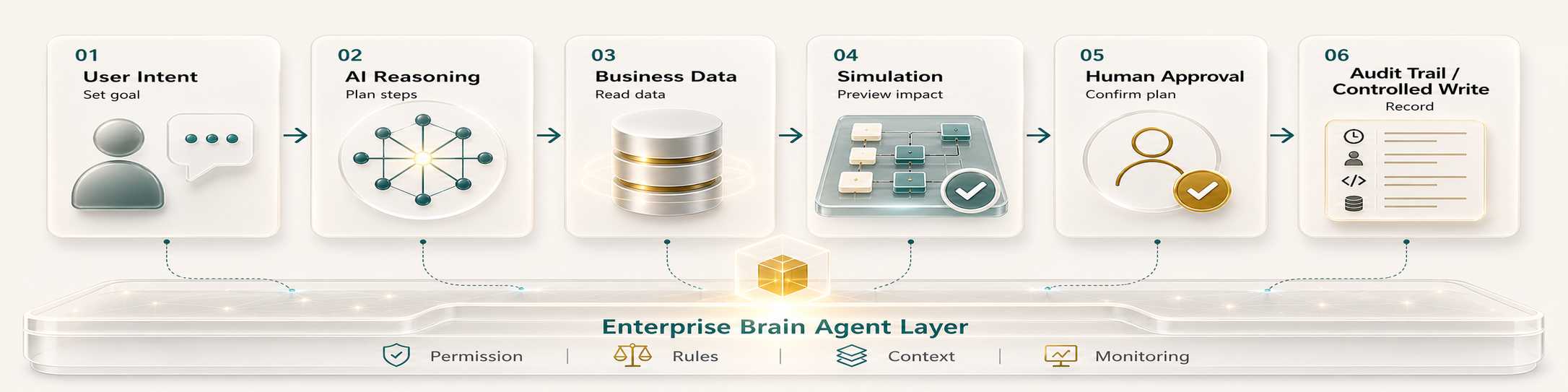
Load goals, past decisions, current data, and available operating knowledge.
Decide notification priority, operation risk, and whether approval is required.
Record outcomes, update business understanding, and turn successful paths into repeatable routines.
Goal memory is not a to-do list
The goal memory layer stores quantitative targets, promises, open decisions, business priorities, and tensions between goals. It is a dynamic knowledge graph, not a mechanical checklist.
Why start with logistics and AR
Nexus Lab starts from forwarder receivables because the pain is clear: overdue accounts, repeated follow-up, data entry, measurable collection speed, and easy proof of value.
Discuss your workflow